
How Blue Zones Project Albert Lea Birthed a Decade of Change—and They’re Not Done Yet
In 2009, the very first Blue Zones Project® descended on the “city between the lakes.” Albert Lea was a natural beauty south of Minneapolis, known for bodies of water and easy green hills. It became the launchpad for a groundbreaking community well-being initiative that targets policy, the built environment, and even the city’s social fabric, with the goal to make healthy choices easier.
Since its launch, Blue Zones Project Albert Lea has made such an impact that it continues to be felt and seen—changing the consciousness of a community and not just the infrastructure. Albert Lea became the first Certified Blue Zones Community® in 2016, and the city has maintained its pursuit of health, joy, and longevity. Here’s how Blue Zones Project Albert Lea holds up a decade after their certification.
Since its launch, Blue Zones Project Albert Lea made such an impact that it continues to be felt and seen—changing the consciousness of a community and not just the infrastructure. Share on X
Changing Lives
In 2009, Lana Howe was a high school junior weighing her future options. She’d seen flyers about Blue Zones Project and knew it was hosting events at her school. As she walked into the auditorium hoping to learn more, she had no inkling that this action would change her life.
That introduction to Blue Zones principles came at a crucial time, awakening her to new possibilities. Lana cared deeply about community impact, but she didn’t know that she could serve that purpose through public health. But, in listening to the Blue Zones Story speech, she found it was built upon the same values that she was.
“I was already involved in civic service and giving back,” Lana recalls. “From Christmas caroling at nursing homes to working on community gardens, I’d learned early on that life isn’t just about you. The work of many people allows communities to have what they have. So, the Blue Zones approach was right in my wheelhouse.”
Fittingly, her Blue Zones Project involvement centered on people-driven work like advocacy and peer-to-peer mentorship. She joined a youth committee that championed substance abuse prevention and tobacco control. The teen advocates helped enact school-wide tobacco control policies that bled into the community, feeding a wave of reform that ultimately made local parks tobacco-free.
This tied into larger Blue Zones Project policy efforts across the city. Lana saw firsthand how everyday people can drive change that helps other people. Between 2009 and 2016, the percentage of adult smokers in Albert Lea went from 23 to 14.7. Tobacco use was eliminated at 550 public housing units and 14 of the city’s top 20 worksites.
“I used to think [public health] was mostly the medical side of things, like immunization. But I’ve seen that it’s more about prevention and doing what I can to try to impact long-term health, whether it’s tobacco-related disease or cancer. And when I think back to first hearing about [the original] blue zones, that’s what stuck out: how health isn’t just the result of individual choice but a community ecosystem.”
Today, Lana’s a health educator and coordinator under the Statewide Health Improvement Program known as SHIP. She remains in her beloved hometown. Having seen it transform, and helped it to do so, she now reaps the rewards of her own investment.

Changing Minds
From the Albert Lea pilot project to the many initiatives it’s done since, Blue Zones Project has always worked to enhance built environments to make healthy choices easier. But before cities see new sidewalks and parks, a mindset shift is often required. As a strategic partner to civic leaders, Blue Zones Project sheds fresh light on existing health and well-being challenges and inspires renewed investment in solutions.
From the Albert Lea pilot project to the many initiatives it’s done since, Blue Zones Project has always worked to enhance built environments to make healthy choices easier. Share on XCity Engineer Steven Jahnke saw this firsthand. At the start of Blue Zones Project Albert Lea, the city hadn’t built new sidewalks in nearly 40 years. Instead, it had chosen to widen roads, which ultimately presented its own set of challenges. Though the situation wasn’t conducive to walkability, people were accustomed to it, and sidewalks weren’t deemed a high-priority item.
“But the early meetings between Blue Zones Project and City Council revealed that there were too many gaps in town,” he says. “We had sidewalks that led somewhere, stopped abruptly and picked up again. We had a beautiful five-mile lake that you couldn’t even walk around. It went from nothing being said about sidewalks to a clear understanding that we needed a Complete Streets policy.”
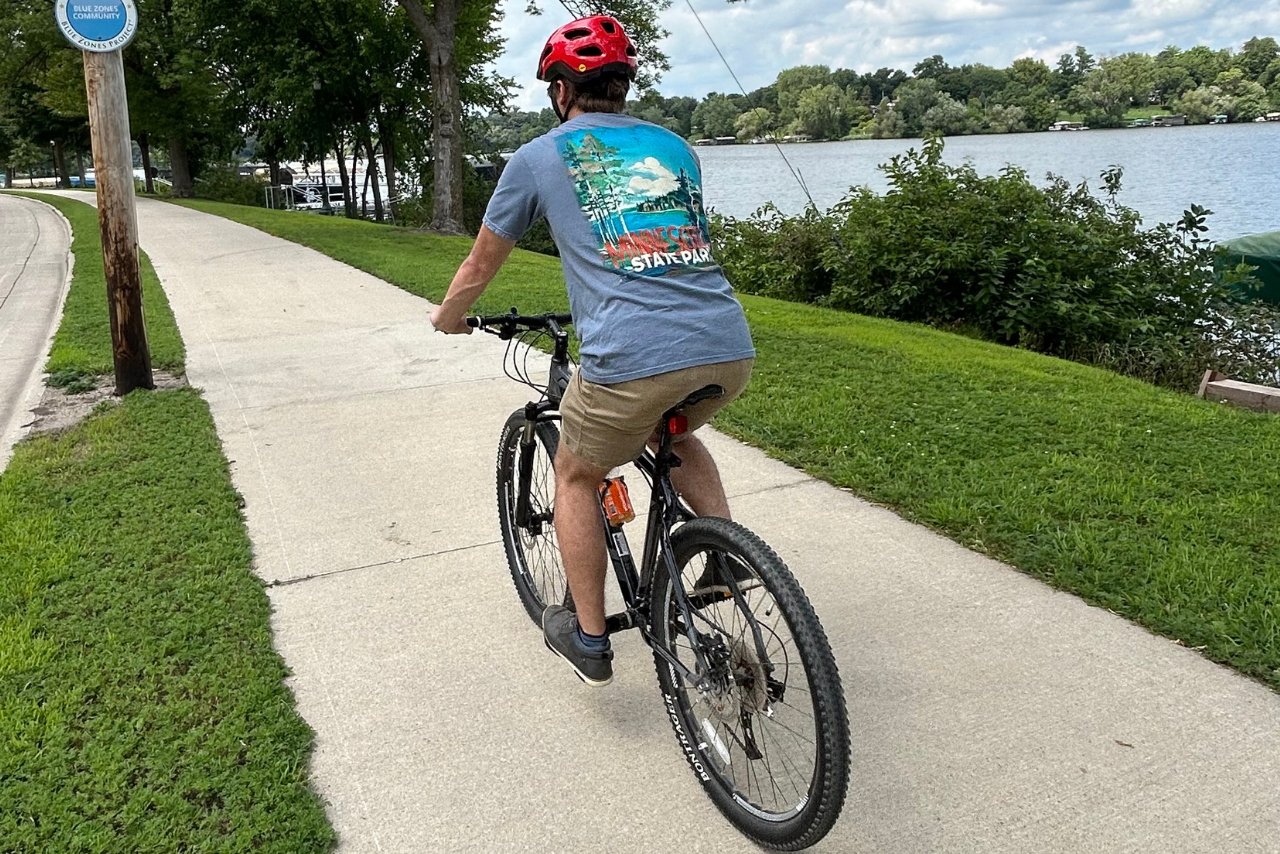
The city chose to put at least one side of sidewalk on all its state-aid streets, those being the busiest in town. By 2015, Albert Lea had built a walking and biking route around Fountain Lake and named it the Blue Zones Walkway. It passes through neighborhoods, businesses, and parks, even connecting to a hospital.
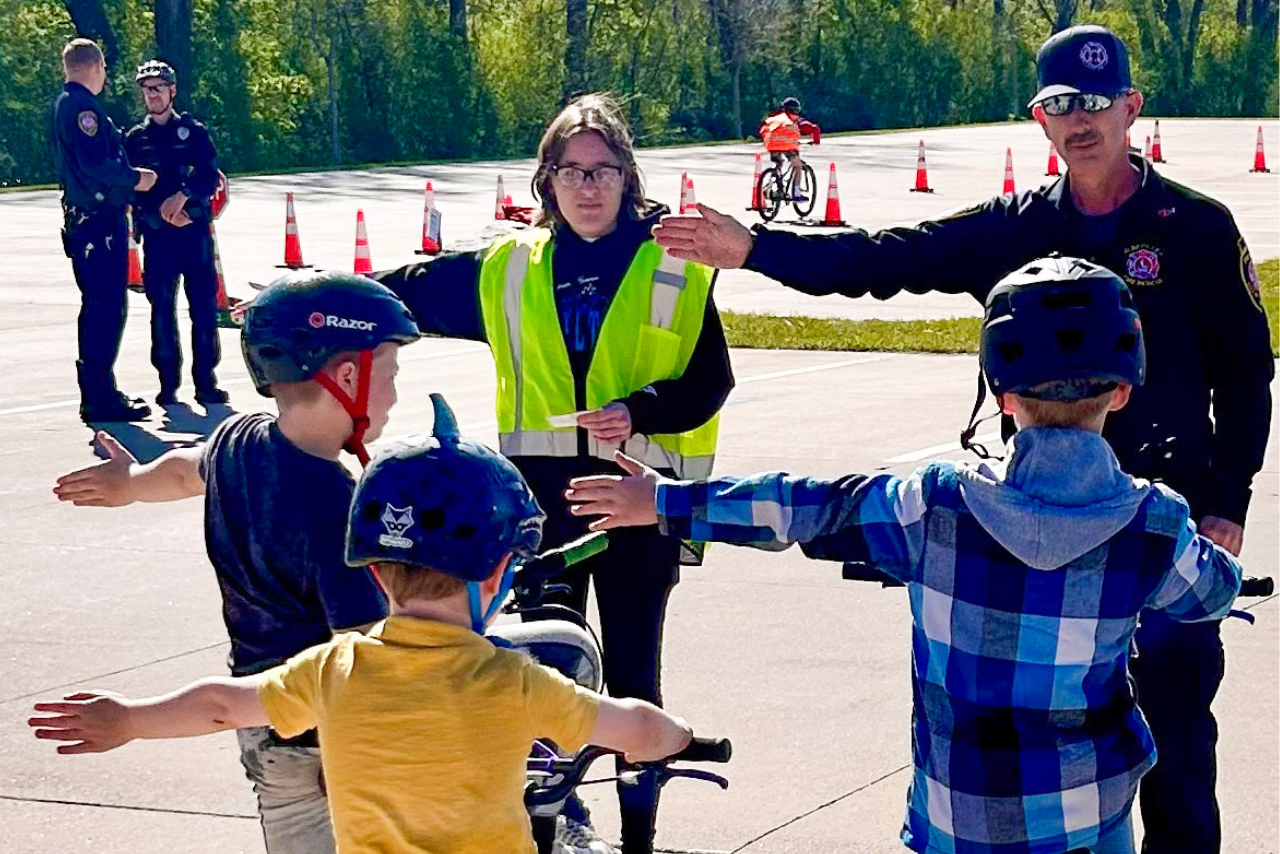
Since 2009, the city has added 14 miles of sidewalks and trails, filling in gaps to connect systems for walking, biking, and other natural movement. Now, Albert Lea has 77 miles of sidewalks and trails, increasing paved pathways by 18.2%. These material differences have changed lived experiences—and done so in less than a generation. Lana Howe couldn’t walk to school growing up because the sidewalks didn’t connect all the way there. When her younger sibling had the opposite experience, it felt like a full-circle moment.
Steven Jahnke credits Blue Zones Project with the mindset shifts that enabled these wins. As leaders often must, the City Council changed first. Before 2009, 100% of sidewalk installation costs were assessed to the property owners that would benefit. In 2009, the Council reduced that figure to 50%. In 2017, it dropped to 25%, driven by the belief that complete streets benefit all.

This shows the lasting impact of Blue Zones principles. Moreover, Steven notes that street work is met with less resistance now, suggesting a broader cultural shift.
“[In the early days] several locations that tried to replace existing sidewalks got pushback from the public. But Blue Zones Project helped show that not only was the work needed, we actually needed more. Now there’s no opposition. And when it’s time to do a new road, we have a map developed by a Blue Zones Project working group that highlights areas with the greatest need.”

Changing Spaces
The City Council is building fervently with the future in mind. This includes a massive trail connecting Albert Lea to Waseca. The Songbird Trail will pass through much of the city, tying in existing sidewalks and a number of neighborhoods, ensuring that most residents have a trail nearby. The first construction phase was recently approved.
And in the heart of the city, downtown still bears the mark of revival. Under Blue Zones Project’s downtown streetscape project, this historic neighborhood was transformed to improve spatial use, economic viability, and safety.
A previously unused park was turned into a community venue, complete with a pavilion. It’s now a music venue on Thursday nights and a place to gather whenever the need arises. The neighborhood was also beautified with lights, benches, plants, and murals, while a section of Broadway Avenue was reconstructed to reduce collisions.
“We went from seeing 12 or 13 accidents per year [in that spot] to seeing four or five,” says Steven. “And among those that still occur, injuries tend to be less severe […] All this work took downtown from a place to pass through to a place that people want to be.”
Such changes do more than breathe new life into a place; they have a material impact. At the close of Blue Zones Project Albert Lea, downtown property values were up 25% and foot traffic on Broadway Street was up a whopping 98%. This enticed 12 businesses to relocate to the area. In 2019, there were 34 in that corridor.

These are more than statistics for people whose living is tied to the prosperity of a neighborhood. Linda Knudsen has managed Plymouth Shoe Store on Broadway for the last 25 years. It’s been in her husband’s family for over a century. She’s seen firsthand that business does better in spaces that people enjoy spending time in.
“Before Blue Zones Project, we mostly saw older people come in,” she says. “Now, we see both older and younger, plus visitors from surrounding states. We have 17 mom-and-pop shops, from boutiques to furniture to wellness. So, they come to see that. We’re also connected to the trail and close to the water, so some find us that way.”
Like many brick-and-mortar businesses, those in the corridor felt the sting of the COVID-19 pandemic. Customers turned to online shopping, and some never looked back. But Linda doesn’t feel that business is bad these days, “just different.” The stores band together to recommend each other and partner with the city to host events for Valentine’s Day, hunting season, and everything in between.
The world has changed in ways that make wins harder to maintain, but she sees the downtown project as a net positive. Albert Lea’s commitment to growth all but ensures that many will someday say the same.
“We’ll be building for the next 20 years,” says Steven Jahnke. “Filling in gaps and adding as we go.” And it’s not a complaint, it’s a declaration.

Building Places
On the north side of Fountain Lake lies Brookside Park. Within it, the Brookside Boathouse is a community resource that provides experiential education. People come to check out equipment for recreational use: from kayaks and paddleboards to bikes fit for snow, rain, or shine. Being so close to the trail and the water, it weakens the barrier of inconvenience.
“The Blue Zones way is to make healthy choices easier,” says John Double, Director of Community Education for Albert Lea Area Schools. “It’s not easy to lug a canoe around to get on the water or a bike to get on a trail.”
“Plus our weather changes from one moment to the next, and we see different extremes throughout the year,” adds Alex Hagen, Experiential Education Coordinator for Albert Lea Area Schools Community Education program. “We make it possible for people to be active in all conditions.”

Established in 2010, the Boathouse also provides programming for summer school students and a substance abuse treatment center. People in the latter program come by twice a week, enjoying the physical and mental health benefits of the outdoors. It’s an invaluable resource for people trying to rebuild their lives.
“We do anything from boating to biking to disc golf in different city parks,” says Alex. “Even things like basket weaving and butter making. The Boathouse is the primary location, and the program is Experiential Education, but we’re all over the community giving them the chance to experience different vocations.”

The Boathouse was funded by a mix of private citizens, civic bodies, and local businesses. But both John and Alex trace its origins back to Blue Zones Project. The construction materials originally belonged to a local who was planning to build a personal cabin. After Blue Zones Project began, he chose to provide the materials while the city prepared the location.
“I don’t see the idea for the Boathouse springing up without that ideological shift that came in through Blue Zones,” says Alex. “I don’t think there would be one without the other.”
Unsurprisingly, Boathouse programming bears traces of the Blue Zones Project ethos. When Alex describes his time with the treatment center cohort, it sounds just like downshifting.
“A major thing we strive to do is give space to relax and take a moment from the trappings of daily life. It’s not just about activities or building skills, it’s also [the peace of] sitting down and working with our hands. Or just taking time to breathe, paddling out on the lake and taking that mental break.”

As it does throughout the city, the work continues here too. In addition to their two climbing walls, they added a kilter wall that adjusts to different angles, meeting diverse climbing needs. An accompanying app allows users to connect to members of the global climbing community. To John’s knowledge, this wall is the only one of its kind in the region.
This summer they partnered with local sponsors to earmark days when the Boathouse and rock wall amenities are completely free. This expands access to residents who may not otherwise have the means. On the free day this June, they served 103 people in a 12-hour window. In July, they saw 118.
“It’s really brought more people out,” says John. “We’re also seeing people from surrounding areas who don’t have this opportunity in their communities. And we’ve recently had two more sponsors come forth, so we have some days coming in August as well.”
And while the space needs money to run, and can’t be free year-round, state funding and community collaborations help it charge less than businesses offering similar services. In this way, each sector of society contributes what it can. A group of public and private partners came together to install an art walk around Fountain Lake. Another partnership built a dog park nearby.
“The city added sheltered picnic tables, so it’s continuing to expand,” says John. “People form connections because their dogs get along and set dates to walk their dogs at the same time. It’s been outstanding.”
Changing Legacy
For his part, Alex favors the Blue Zones Walkway. He and his partner take their newborn out for fresh air, enjoying the work of local sculptors and artisans. Steven Jahnke bikes there weekly, though he wishes he could do more. Lana Howe notes that being near the trail was a major selling point when she bought her home.
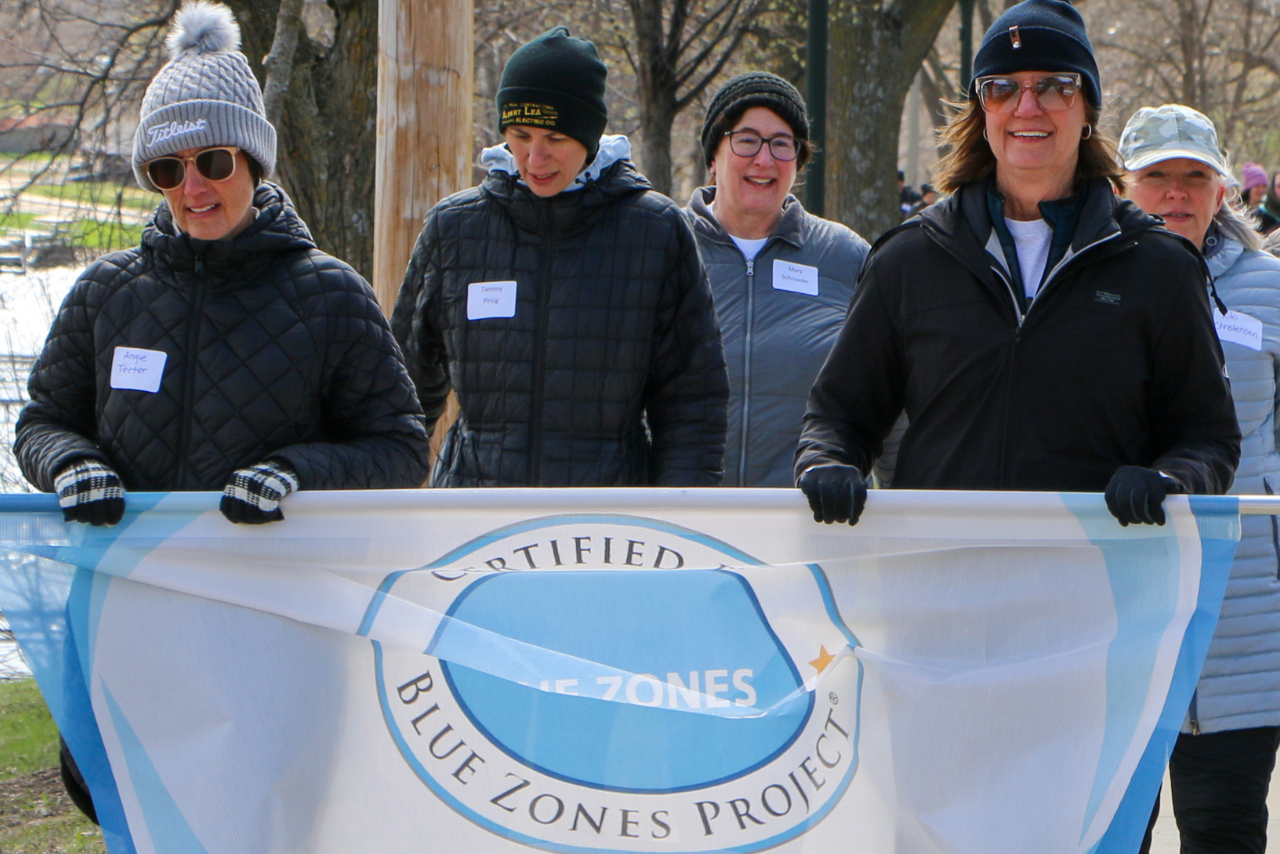
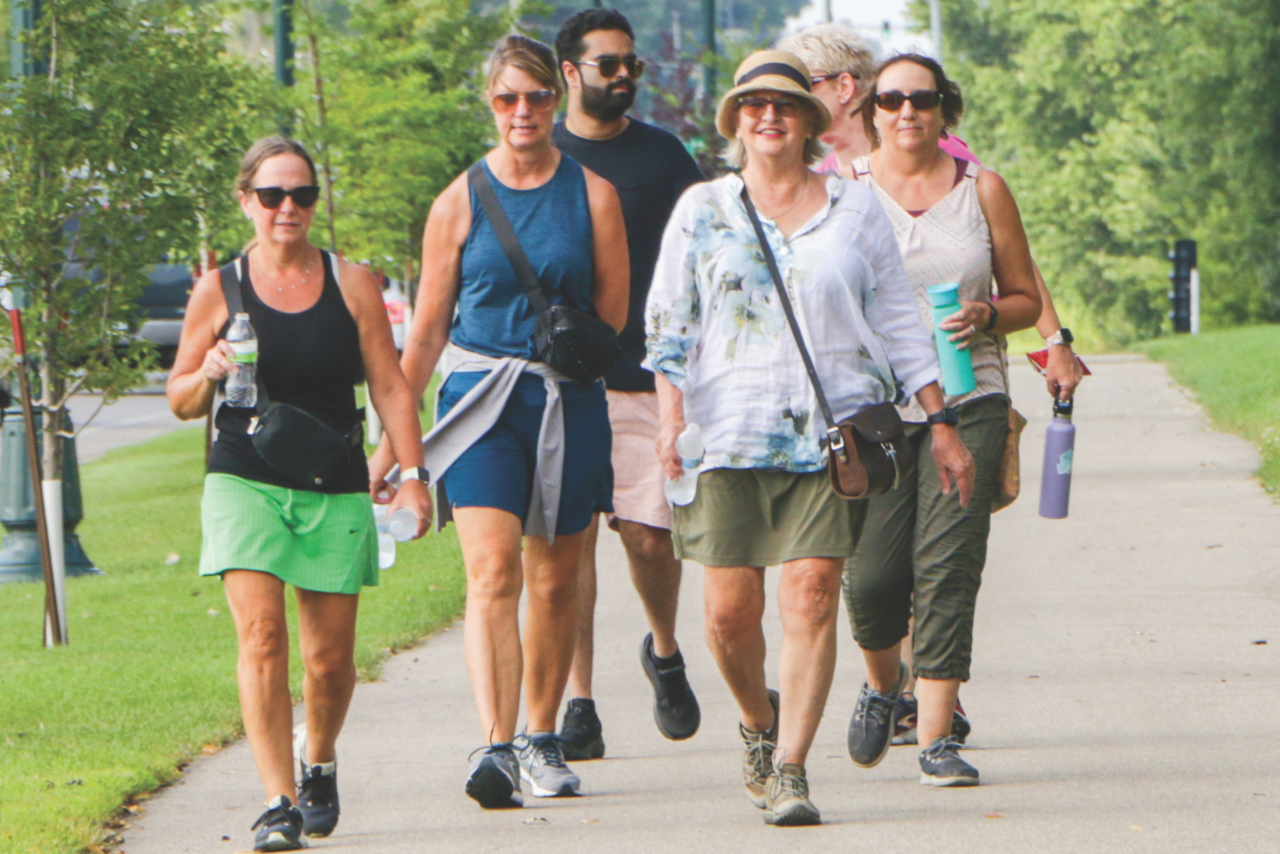
It’s the most popular route in the city by far. To this day, people use it in groups, though they don’t always call them moais.
“There are so many around the community,” says Lana. “People are still getting up early to meet friends and walk, though they don’t always connect it to Blue Zones Project. But I think that’s how they started.”
And that might be the greatest testimonial. That a project engagement could be so thoroughly absorbed that it becomes just another thing people do. A successful transformation embeds itself in the fabric of local life. So while projects start with a three- or five-year commitment, the community work is never quite through.
As long as there are spaces, places, and people, there are decisions to be made that impact community well-being. The dream of Blue Zones Project is that the healthy choice will win every time.
As long as there are spaces, places, and people, there are decisions to be made that impact community well-being. The dream of Blue Zones Project is that the healthy choice will win every time. Share on XNonjabulo Mlangeni is a writer, researcher, and editor based in Los Angeles, California. She focuses on health, equity, and creative nonfiction.
Related Articles
-

When we started the Blue Zones Project® pilot in Albert Lea, Minnesota, in 2009,…
-

While Blue Zones Projects are associated with improved health outcomes and quality of life…
-

Have you ever considered recruiting a walking buddy (or a few) to keep you…
-

Walkable communities are healthier and more economical, but they also offer so much more—they…