The Community Volunteer Summit hosted by Blue Zones Project Petaluma brought together approximately 800 high school students and 22 nonprofit organizations. The goal was to promote volunteerism while simultaneously showing youth that volunteering can be a great avenue for pursuing their interests.
The Community Volunteer Summit hosted by Blue Zones Project Petaluma brought together approximately 800 high school students and 22 nonprofit organizations. Share on XThe event was held at Casa Grande High School in Petaluma, a city in Sonoma County, California. Event sponsors included Healthy Petaluma District & Foundation, the City of Petaluma, and Providence Petaluma Valley Hospital.
“It was a win for everybody involved,” said Ethan Schiff, Community Engagement & Marketing Lead for Blue Zones Project Petaluma. “Students got to interact with lots of different organizations and ask questions, learn, and sign up for things they were interested in. The school […] already told us they loved [the event] so much that they’re considering it their first annual event. And from the nonprofit lens, many organizations that participated have told us they felt like they got more engagement from this tabling event than any they had done in years. Some of them reported having over one hundred signups.”
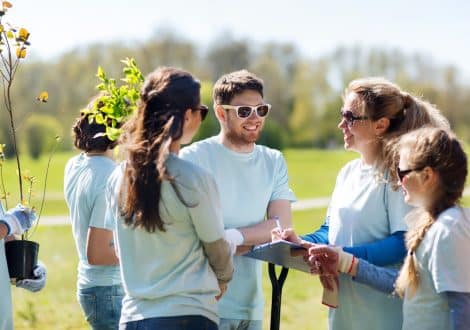
During the event, students had the opportunity to visit and speak to representatives from participating organizations and sign up to volunteer. More than 20 teachers brought their students to the event during class, and the event was also open to students during their lunch breaks.
Blue Zones Project Petaluma has previously led Purpose Workshops at the high school to help students hone their interests. Share on XBlue Zones Project Petaluma has previously led Purpose Workshops at the high school to help students hone their interests. “Many of these students had just done our Purpose Workshops, so they were coming in with that fresh awareness around their talents and passions and areas of focus,” Schiff said.
“Many of these students had just done our Purpose Workshops, so they were coming in with that fresh awareness around their talents and passions and areas of focus,” Schiff said. Share on X
What are Purpose Workshops?
Having purpose is one of the Blue Zones Power 9® principles. The Power 9® is a web of nine interconnected principles based on commonalities identified in the world’s original blue zones, known for longevity. Share on XHaving purpose is one of the Blue Zones Power 9® principles. The Power 9® is a web of nine interconnected principles based on commonalities identified in the world’s original blue zones, known for longevity. These five blue zones include: Okinawa, Japan; Nicoya, Costa Rica; Ikaria, Greece; Loma Linda, California; and Sardinia, Italy. According to the “Purpose” principle, finding one’s purpose can help people of all ages to have a greater sense of meaning and direction in their lives, potentially resulting in increased happiness, improved work performance, and a longer lifespan.
According to the “Purpose” principle, finding one’s purpose can help people of all ages to have a greater sense of meaning and direction in their lives, potentially resulting in increased happiness, improved work performance, and a… Share on XA Purpose Workshop is a two-hour event–held by Blue Zones Project communities and led by a certified facilitator–that helps people find clarity on their life purpose. It’s about discovering or rediscovering one’s gifts, talents, and values. It’s also a time of reflection and interactive discussions. At the end of each workshop, individuals can walk away encouraged and equipped with their own unique purpose statement and tools for living a more purposeful life.
A Purpose Workshop is a two-hour event–held by Blue Zones Project communities and led by a certified facilitator–that helps people find clarity on their life purpose. Share on X
Student engagement soars high during summit
“A big goal was to host a really diverse, eclectic list of organizations to help students realize there are a wide range of opportunities,” Schiff said. Some of the organizations that participated include the Petaluma Music Festival, Rebuilding Together, Senior Advocacy Services, and The Village Network. Local food banks, shelters, community gardens, and farms were also represented.
“A big goal was to host a really diverse, eclectic list of organizations to help students realize there are a wide range of opportunities,” Schiff said. Share on XElizabeth McKoy, founder and director of Artaluma, a multidisciplinary creativity center in downtown Petaluma for adults and families, received 32 student volunteer sign-ups during the event. “I was so impressed with the high school students’ ability to ask questions, listen carefully, and engage thoughtfully, and with enthusiasm…The teens were able to ask excellent questions and not just superficially sign the volunteer sheet,” she said. “The deeper interest that the teens showed in learning about Artaluma’s volunteer opportunities felt like a direct consequence of having taken the Purpose Workshop with Blue Zones Project. They were seeking a ‘why,’ not just a ‘what.’”
“We made approximately 450 student contacts during the summit,” said Lynne Gordon Moquete, Executive Director of Una Vida, an organization that provides food, clothing, and other vital resources to the community.
“I was blessed to be there with two students from the school who have already been volunteering with Una Vida since last year,” she said. “The format of the summit was perfect and well thought out. The nonprofit organizations that were represented were perfectly fit for the high school population. It was amazing to watch close to 800 high school kids walk through the summit, asking important questions of the nonprofits represented, and learning about the amazing work being done in Petaluma.”

The summit was the culmination of months of work
The Community Volunteer Summit was the culmination of close to a year of People, Places, and Policy work in the community by Blue Zones Project Petaluma, which kicked off in April of 2023.
Through Places work in local schools, Blue Zones Project Petaluma facilitated a series of Purpose Workshops for high school students. “Students asked many questions about where they could volunteer in the community, and we learned that many students were unaware of the volunteer opportunities and the community-based organizations providing community services in Petaluma,” said Nichole Warwick, Executive Director of Blue Zones Project Petaluma.
Through Places work in local schools, Blue Zones Project Petaluma facilitated a series of Purpose Workshops for high school students. Share on X“Through our People work in convening local nonprofit organizations, we conducted a survey amongst 16 organizations to better understand the trends, barriers, and opportunities with volunteerism.” Blue Zones Project then partnered with Petaluma Community Relations Council to host a Purpose Workshop for leaders of these groups and subsequently hosted a forum for discussing the findings of the survey.
“In this context, we learned that local organizations desired more youth engagement, but there were barriers to accessing students through the schools, especially post-pandemic,” Warwick said.
Through Policy work, the Blue Zones Project team also identified a gap in youth leadership across nearly all sectors in the community. “While the City of Petaluma is undergoing General Plan Updates, community leaders designing complete and safe streets, third places, and food resilience hubs noted an absence of youth perspective and engagement in these areas,” she said.
The result was the Volunteer Summit bringing Petaluma youth and nonprofits together in one space, thanks to support from the event’s generous sponsors, Casa Grande High School, and its teachers.
The high school provided the use of its large, open, multipurpose room for the event. Schiff said, “We also had a teacher there who was a champion who really understood the Blue Zones mission and wanted to advocate for it.” This teacher secured signups from 23 teachers who committed to bringing one of their classes to the summit.
“What was really beautiful about this process was that it was like the true intersection of people, places, and policy work all together in one project, and that felt really important, special, and meaningful,” said Schiff.
“What was really beautiful about this process was that it was like the true intersection of people, places, and policy work all together in one project, and that felt really important, special, and meaningful,” said Schiff. Share on X“The brilliance of Blue Zones Project is we learn about the community’s needs, desires, and barriers related to health and well-being across multiple pillars, and then we collaboratively build strategies that weave together collective impact initiatives that empower everyone to live better, longer,” said Warwick.
“The brilliance of Blue Zones Project is we learn about the community’s needs, desires, and barriers related to health and well-being across multiple pillars, and then we collaboratively build strategies that weave together collective… Share on X
Why are volunteerism and youth engagement so important?
“Volunteerism and civic engagement in communities are strong indicators of a longer and more fulfilling life,” Warwick explained. However, teen isolation and lack of volunteers are problems that are widespread across communities in America, including Petaluma.
“Within Petaluma, we’re discovering there’s a lack of third spaces for teens or spaces to hang out. That’s one challenge – teens feeling isolated – which I don’t think is specific to Petaluma but is more cultural, with lots of influence around social media and teen mental health. It’s definitely something we’re working toward improving: the sense of belonging within the population here.”
According to a 2024 study by researchers at the U.S. Centers for Disease Control and Prevention (CDC), 58.5% of teens in the U.S. do not receive the social and emotional support they need, which is closely linked to teen mental and physical health issues.
Nationwide, there has also been an overall decline in volunteerism, which has even been linked to the divisiveness now seen across the country.
“What we’ve also discovered here is that there’s a small group of people that are doing almost all of the volunteering in town, and then you run the risk of the volunteers becoming burnt out, spread too thin, and also not always feeling appreciated,” Schiff explained. “So, there’s a goal to get younger people interested and also to get teens or younger people in general to almost rebrand or rethink what volunteering even means to them.”
Whereas historically, a younger person might have only thought of volunteering to get the hours they needed for school, Schiff said, “One of our goals is to help young people realize that volunteering can be much broader and can be directly aligned with areas they’re personally passionate about.
One of our goals is to help young people realize that volunteering can be much broader and can be directly aligned with areas they’re personally passionate about. -Ethan Schiff Share on XLisa Oliver Monroe is a journalist and author of a travel book about America’s Historic Triangle (Williamsburg, Jamestown, and Yorktown). Her writing has been published by Virginia Living, Boomer Magazine, Kirkus Media, Advance for Nurses, and Colonial Williamsburg, among many others.