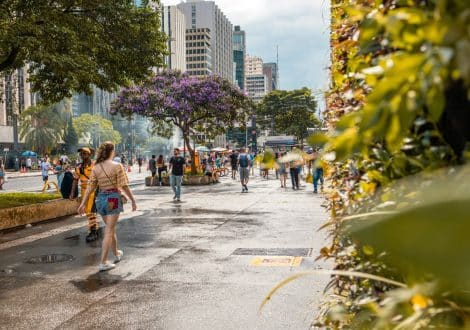
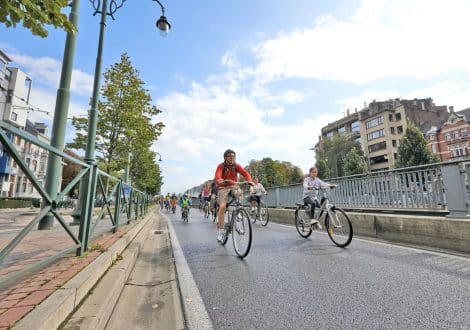
Health is often assumed to be a personal responsibility. Something that’s viewed as an individual journey of maintaining health in the gym, building consistent healthy eating habits, or following strict routines. But what if the biggest influence on your daily activity had nothing to do with your motivation? What if the biggest factor that shapes your health is simply what’s outside your door and the streets that surround you? At Blue Zones, it has long been our belief that our environment shapes the people in it and their behaviors. Research confirms what’s been seen in the world’s longest-lived communities, that where you live determines how you move. From the garden-lined streets of Okinawa to the sunlit footpaths of Sardinia, the world’s longest-lived people all share a recurring habit: they all move naturally throughout the day, by simply living their daily lives.
Blue Zones’ Belief in Walkability
By living within a Life Radius (the area close to homes, schools, and workplaces where we spend 90% of our lives) that supports healthy habits, people can feel more connected to their local community and enjoy natural, intuitive daily activity. For centenarians in the blue zones, walking isn’t exercise; it’s a means of transportation, and daily activities frequently include a walk to the market or to a neighbor’s house for a chat. Centenarians don’t necessarily plan their walks either; instead, they are naturally nudged into movement about every 20 minutes or so. Walking is also an incredible tool for fighting cardiovascular disease and strengthening joints and muscles, and choosing to walk is also a step towards living a more sustainable life.
Blue Zones’ research shows that an optimized environment is the key to living the healthiest, longest life possible. Your environment dictates your behavior, and when living life in a well-planned urban environment, residents from all walks of life are able to achieve a more active, healthy lifestyle without the need for gyms, life coaches, or personal motivation. Longevity is not built alone through willpower, but through our daily surroundings that guide us towards healthier choices, day after day. This is the heart of what we’ve learned from the longest living people in the world.
Blue Zones' research shows that an optimized environment is the key to living the healthiest, longest life possible. Share on XBuilt Environment Optimization is Linked to Increased Physical Movement and Overall Well-Being
Just as flowers bloom where they are planted, people have the capability to thrive in the environment where they live and operate. Decades of Blue Zones research shows that our environment helps us to make healthy life choices within the area close to home.
A well-designed urban area is created with its residents in mind. A neighborhood that has features like safe sidewalks, accessible pedestrian crossings, secure speed and traffic control, and general cityscape beauty encourages residents from all income brackets to leave their homes and enjoy their surroundings. A city’s walkability is also a key component in helping people improve their physical well-being. Daily physical activity has a wide range of benefits; moving daily increases lifespan, strengthens cardiovascular health, manages weight, and lowers the risk of chronic diseases. These benefits are not only for athletes, but for anyone living in a place that makes movement more automatic.
Smartphone Data Collection: A Natural Mobility Experiment
With the cellphones in our pockets, we have access to unlimited information—including tailored health data personalized to our current lifestyle. In the 2025 study, ¨Countrywide natural experience links built environment to physical activity,¨ researchers investigated the correlation between where people live, the design of their various cities, and how this directly impacted the physical activity of the local residents. Using data collected from over 2 million U.S. smartphone users across 1,600 cities, the authors analyzed tracked movement (step count in real time) to compare physical activity rates by users across the country.
It is no surprise that the researchers found that when moving to a more walkable city—a well-designed city that is specifically created to make it easier to get from point A to point B without the need for taxis, ride-share services, or public transportation—the step count of locals increased by almost 1,000 to 1,200 steps daily. This substantial shift happened without any of the participants setting fitness goals or changing their routines on purpose. In other words, the city itself did the work. The city started building the people.
Unsurprisingly, what was also found in this study was the inverse of increased movement when U.S. smartphone users relocated to a less-walkable city. Lengthy city streets, dangerous traffic speeds, inaccessible pedestrian crossings, and an unattractive city disincentivized people from leaving their homes and walking about the city. Authors found that the effect on the environment was almost symmetrical; alarmingly, smartphone users who moved to a less-walkable city decreased their physical daily step count by nearly 1,000 steps a day. Moving to a less walkable city meant that routine physical activity decreased by a shocking amount. The study serves as a reminder that the places we build directly shape the lives of the people who live inside them. For better or for worse.
Optimizing Environments
Community is often formed around convenience and proximity. Communities with access to walkable streets, pedestrian crossings, low traffic streets with safe speed limits, and inviting green spaces encourage residents to leave their homes. Urban planning efforts centered on resident well-being help make the outdoors accessible, increasing residents’ access to walking and routine physical movement. These could be as simple as having easy-to-access amenities and connected sidewalks that make it comfortable and convenient for residents to walk to local supermarkets, parks, cafes, and public transport. In the world’s blue zones regions, similar small daily walks to a neighbor’s house or to the market aren’t an exercise routine, but simply a part of life.
According to Blue Zones principles, cities can be enhanced with a variety of key strategies, which include:
- Walkable Communities: Living in areas that are designed with safe, clear pathways and trails that work to encourage residents to walk or bike, rather than drive
- Active Transportation Zones: Cities that have specific bike zones and secure pedestrian crossings encourage more people to increase their physical activity in a safe way
- Dense City Planning: A higher density of human activity means that local amenities are closer and easier to reach; in low-density areas, things are further away, which discourages people from going on foot or by bike
- Using these strategies, along with other methodologies, Blue Zones Projects across the country have prioritized built environment efforts to improve the places and spaces residents spend their time.
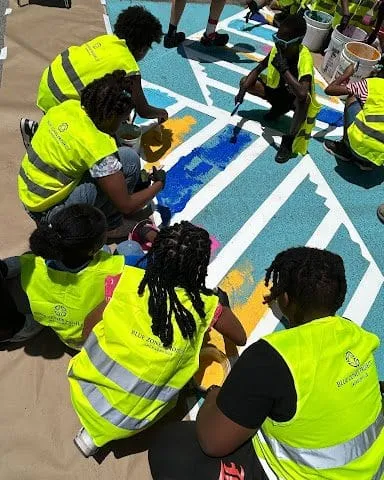 Many communities face high rates of pedestrian injuries. Blue Zones Project Jacksonville, in alignment with the City’s Vision Zero initiative, sought to combat those injuries, particularly among children. In collaboration with local schools, the team implemented interactive traffic gardens—a miniature, car-free, child-scaled network of street features painted on a paved surface—to teach road navigation skills and worked with students to paint activation areas on school grounds. They installed three traffic gardens at elementary schools, and one in a community center, with the potential to impact more than 2,000 students.
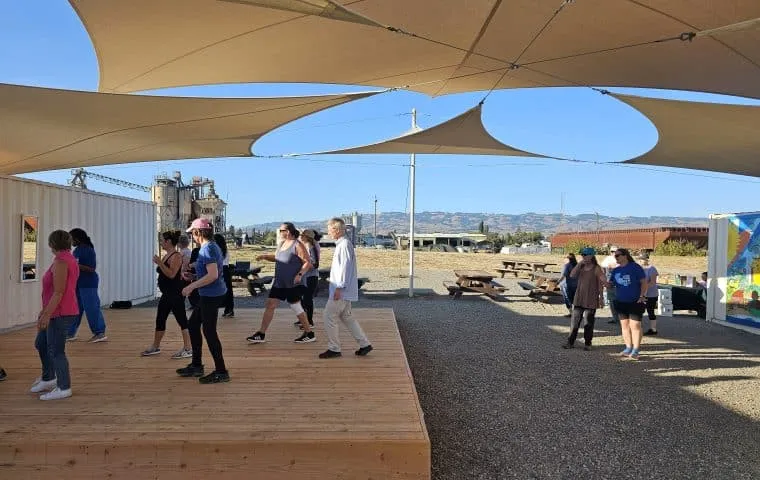
- In 2025, Blue Zones Project Petaluma partnered with the Petaluma River Park Foundation to design and construct a semi-permanent exercise platform and gathering space within the park. In addition to the physical infrastructure, Blue Zones provided early-stage programming, instructor training, and financial support. Together, these elements established a scalable model for flexible public space activation that supports community health and well-being and creates a new third space for residents.
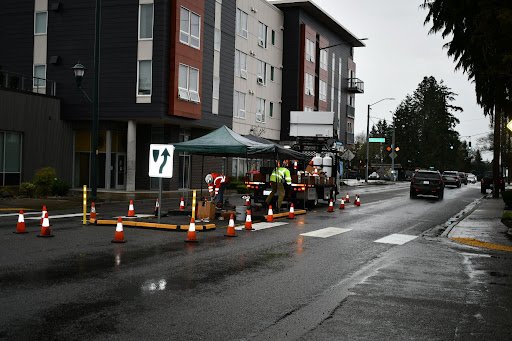 After being awarded funding for the 2025-2027 Pedestrian & Bicycle Safety Program from the Washington State Department of Transportation for the ‘C’ Street South Development/Design to improve active transportation, Blue Zones Project Parkland Spanaway partnered with Pierce County Planning and Public Works staff to develop a conceptual plan for the C Street corridor, which included the recommendation for a refuge island. This project is underway and will not only increase the number of people who walk or bike in the area, but will also add infrastructure to create a safe place to cross the street.
The research from the world’s blue zones hotspots is clear. For decades, these communities have shown that healthy living is not something that needs to be chased. A healthier, happier community is the byproduct of an environment built to support the people in it. A city with safe sidewalks, accessible grocery stores, and ample public spaces to connect with neighbors is more than just a place to live: it is a place to thrive.
A healthier, happier community is the byproduct of an environment built to support the people in it. Share on X
Rae Bennett is a creative strategist who uses storytelling, design, and digital media to inspire well-being and strengthen community connection. She holds a bachelor’s degree in Communications and Studio Art from Christopher Newport University.