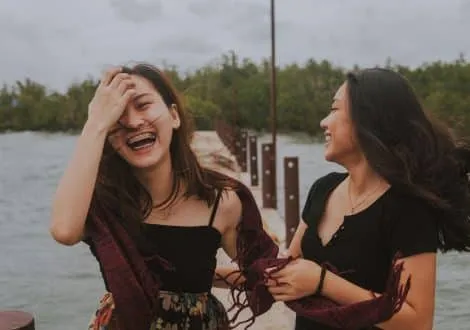
Somewhere between childhood and adulthood, we stopped speaking the language of play: the language of make-believe, lighthearted movement, and spontaneous laughter. But that language still lives within us.
You can hear it in the impromptu laughter that bubbles up during a walk with friends. You can feel it the moment you jump into a lake without thinking, dance in your kitchen, or get caught up in a game that makes time disappear. The instinct to play is still there; we’ve just tucked it away under years of calendars, to-do lists, and the distractions of our fast-moving lives. When was the last time you used your imagination?
The instinct to play is still there; we've just tucked it away under years of calendars, to-do lists, and the distractions of our fast-moving lives. When was the last time you used your imagination? Share on XThe Cost of Growing Up Too Much
As children, we’re hardwired to play. We build forts, invent games, and chase light for no other reason than joy. But by the time we reach adulthood, play is often dismissed as frivolous—something reserved for vacations, nights out drinking, or children’s birthday parties. We swap wonder for responsibility, curiosity for efficiency. And in doing so, we often lose more than we realize.
Play is linked to lower stress levels, improved brain function, greater emotional resilience, and deeper social connection. Play can also help adults reconnect with joy and build stronger relationships. Share on XAccording to experts, that loss has real consequences. Play is linked to lower stress levels, improved brain function, greater emotional resilience, and deeper social connection. Play can also help adults reconnect with joy and build stronger relationships. As Miracle Recreation puts it, “Taking time out of your daily life to prioritize downtime and enjoyment is vital to health and well-being.” In the world’s blue zones (where people are known to live and thrive longer) play isn’t treated as a luxury. It’s a natural component of daily life.
As Miracle Recreation puts it, “Taking time out of your daily life to prioritize downtime and enjoyment is vital to health and well-being.” In the world’s blue zones (where people are known to live and thrive longer) play isn’t treated… Share on XHow the Longest-Lived People Keep Play Alive
In Okinawa, Japan, elders garden together and practice musical traditions that involve dancing and storytelling. In Nicoya, Costa Rica, communities gather for shared meals, jokes, and spontaneous soccer matches. In Sardinia, Italy, laughter and wine flow freely as neighbors chat and tease each other in the streets.
In Okinawa, Japan, elders garden together and practice musical traditions that involve dancing and storytelling. In Nicoya, Costa Rica, communities gather for shared meals, jokes, and spontaneous soccer matches. In Sardinia, Italy,… Share on XPlay isn’t scheduled in the blue zones, it’s natural. It’s part of the environment. It’s baked into the culture of movement, connection, and downshifting. And it may be one of the subtle secrets to well-being that often gets overlooked in adult life.
Play isn’t scheduled in the blue zones, it's natural. It’s part of the environment. It’s baked into the culture of movement, connection, and downshifting. And it may be one of the subtle secrets to well-being that often gets overlooked… Share on XWhat Counts as Play, Anyway?
Play doesn’t have to mean sports or board games (unless that’s your thing). For adults, play can look like:
- Singing at full volume during your commute
- Tossing a frisbee with a friend
- Drawing, painting, or gardening
- Doing cartwheels in the grass with kids
- Learning a silly TikTok dance, even if no one’s watching
Relearning the Language
So how do we bring more play into our grown-up lives? Start small. Give yourself permission to do one “pointless” thing this week just for the fun of it. Say yes to the invitation to be silly, even if it feels awkward at first. Schedule a walk with no route. Paint with your fingers. Let go of the idea that fun has to be productive.
Play isn’t about being good at something. It’s about being free. And in a culture that often rewards seriousness, learning to speak the language of play again can feel radical. But maybe what we need most isn’t another task or productivity hack—maybe we just need to laugh more. Move more. Be a little lighter, together.
Play isn’t about being good at something. It’s about being free. And in a culture that often rewards seriousness, learning to speak the language of play again can feel radical. Share on XAging is part of life. Losing our sense of wonder doesn’t have to be. Because in the end, we don’t stop playing because we grow old. We grow old because we stop playing.
Aging is part of life. Losing our sense of wonder doesn’t have to be. Because in the end, we don’t stop playing because we grow old. We grow old because we stop playing. Share on XRae Bennett is a creative strategist with a background in branding, content strategy, and community storytelling. Rae brings ideas to life through digital media, editorial content, and visual design. Rae supports initiatives that amplify well-being and social connection, shaped by a passion for healthy, connected communities and place-based transformation. Rae holds a bachelor’s degree in Communications and Studio Art from Christopher Newport University.