For decades, popular wisdom put breakfast on a pedestal without saying why. Today, there’s some debate about whether it’s truly more important than any other meal. Still, as the first meal to break the ‘fast’ of the night, it’s uniquely positioned to give us the best start.
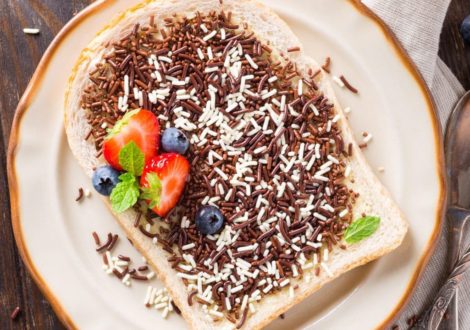
As the first meal to break the ‘fast’ of the night, it's uniquely positioned to give us the best start. Share on XSo it makes sense to load up on the essentials: vitamins, minerals, protein, and fiber. But as the modern American diet grows increasingly comprised of processed foods, even breakfast can lose its luster. In this way, simple carbs and high-sugar options become the norm, from fruit juices and cereals to pastries and toast.
But a wealth of evidence shows the negative impact of consuming highly processed foods. A recent study of over 6,000 people found that participants who ate the most ultra-processed food were more likely to have significantly higher blood pressure, insulin levels, and body mass index. The correlation remained even after researchers accounted for factors like smoking and physical activity.
A recent study of over 6,000 people found that participants who ate the most ultra-processed food were more likely to have significantly higher blood pressure, insulin levels, and body mass index. Share on XWhat happens when you eat a standard American breakfast?
Beyond the long-term effects, there are immediate ones. Since the body metabolizes both sugary and starchy foods into glucose, these meals quickly raise our blood sugar levels. When that energy spike falls just as fast, it can leave us feeling tired or hungry once more.
And while carb crashes are famously unpleasant, they’re also linked to irritability, brain fog, and decreased motivation. Meaning that many who experience a midday slump can trace the culprit back to their plates. Yet this doesn’t have to be the case.
Breakfast in the blue zones
In blue zones, where the world’s longest-lived people reside, breakfast is served differently. First, it’s often the largest meal of the day. For residents of Okinawa, Japan, a standard breakfast might feature miso soup with tofu, sea vegetables, and sweet potatoes. In Nicoya, Costa Rica, people might start their day with gallo pinto, a savory dish that pairs black beans with corn tortillas and rice.
In blue zones, where the world’s longest-lived people reside, breakfast is served differently. First, it’s often the largest meal of the day. Share on X
CNN: The blue zones breakfast that could help you live to 100
Meals that combine protein and complex carbs promote a slow, steady release of energy—helping us avoid spikes and energy dips. Moreover, hearty first meals have been shown to support hunger management during the rest of the day.
This is why beans are a powerful source of morning fuel. Even beyond the blue zones, beans are a breakfast staple in multiple countries, packing a powerful combination of protein and fiber, alongside micronutrients like magnesium, potassium, and iron. Decades of research show that the majority of Americans don’t eat enough fiber. Starting the day with pulses can help close that gap.
As the only blue zones region in the United States, Loma Linda, California, also boasts an impressive life expectancy. This data is more specific to the city’s Seventh-day Adventists, a religious community that sits around 9,000 strong. Since vegetarianism is popular in this denomination, oatmeal has emerged as the people’s champion.
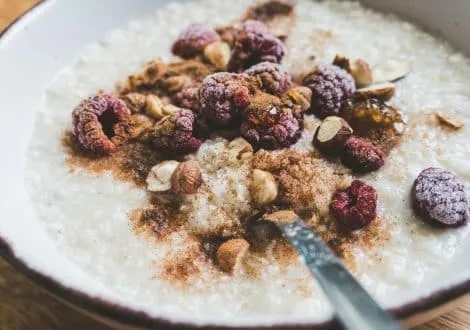
This meal checks many boxes, particularly when using minimally processed oats. For people who can’t commit to elaborate breakfasts, this whole food provides fiber and nutrients for a moderate cost and minimal prep time. Switch it up and try a savory oatmeal for something that is outside of the typical breakfast.
Ultimately, there’s research to support front-loading our calories by eating a larger breakfast and progressively smaller meals as the day wanes. The science also supports prioritizing whole, nutrient-dense foods that fuel us better and longer than highly processed ones. To top it all off, there’s the wisdom of many people in many places who have lived for nearly a century and thrived.
Nonjabulo Mlangeni is a writer, researcher, and editor based in California. She focuses on health, equity, and creative nonfiction.