Natural movement is like medicine to the human mind and body. While the body is satisfied with any motion it can get, it craves daily activity. An attractive substitute for strenuous gym workouts or sports, small acts of day-to-day movement are more impactful than bouts of overstimulating exercise, which can be challenging to maintain.
Natural movement is like medicine to the human mind and body. While the body is satisfied with any motion it can get, it craves daily activity. Share on XEven if you consistently hit the gym a few times a week (if you enjoy it), you should spend more time moving naturally daily. Studies show that doing so gives you longer-term energy and vitality without putting excessive stress on your body. And we know people from the blue zones are nudged into movement about every 20 minutes or so because their environments and lifestyles are set up to keep them moving without thinking about it. Benefits linked to this form of daily, constant physical activity include lowered risks of mental health disorders, heart disease, and conditions like type 2 diabetes.
People from the blue zones are nudged into movement about every 20 minutes or so because their environments and lifestyles are set up to keep them moving without thinking about it. Share on XWith headlines like “Sitting is the new smoking” and “The dangers of sitting,” walking pads and treadmill desks have become extremely popular. They’re often low profile and inexpensive, but if you don’t have the space or budget for one, here are a few ideas for how you can conveniently infuse natural movement into your daily routine—ones that are easy to maintain when life gets busy. You can knock these out at work, your living room, or outside in nature.
Meet on the move
Walking meetings are a growing trend that favors meeting outdoors over sedentary conference rooms—but the concept isn’t really that new. Greek philosopher Aristotle was rumored to walk while lecturing, and get a load of this fun fact: he founded Ancient Greece’s Peripatetic School of Philosophy and named it after the walkways of the Lyceum where he taught. Philosophical predecessors of Socrates, the Sophists, were also nomads who preferred to travel and teach. These mannerisms aren’t too far off from the walk-savvy blue zones residents of Ikaria, Greece.
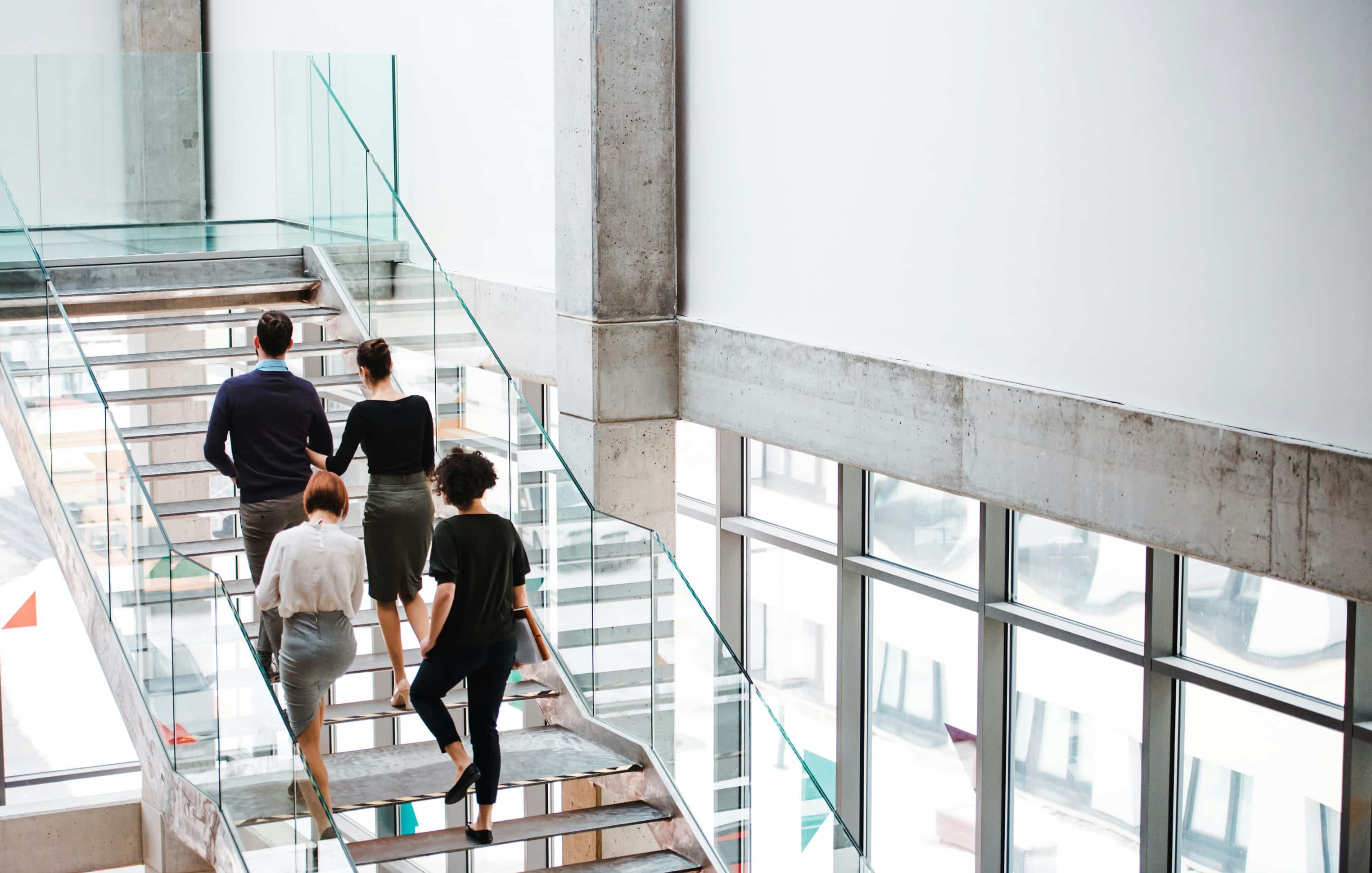
In today’s world, most office workers only step away from the desk during breaks and meetings. Why not give your team a reason to switch things up? When there’s a problem, a conflict, or an urgent decision that needs to be addressed, consider skipping the sunless conference room and plan a walking meeting. These meetings have several physical benefits, from increased circulation and joint mobility to improved posture. Walking itself symbolizes progress and momentum, which is exactly what’s needed for a successful meeting. If there’s a nature site by the office, or you’re located downtown, these are ideal places to host these gatherings.
Walking meetings are said to provide a much-needed energy and productivity boost. Meetings with fresh air and scenic views can spark inspiration, stimulating new creative ideas and solutions along the journey. Team leaders walking alongside their staff members can also amplify interpersonal connections that build trust and loyalty. Meetings of this nature are known to promote healthy interactions, so don’t be surprised if co-workers return to the office with strengthened relationships. Remote teams can make this work, too, by inviting meeting participants to step outdoors for meetings with their phones. You might not be able to walk together physically, but you can still walk and chat from a distance.
Pacing during phone calls
When taking phone calls, do you have a natural habit of walking around? If so, congratulations: this gets you one step closer to meeting your daily movement quota. It’s actually common to be a phone pacer, and it seems like the first instinct for many call takers is to get up and move. The scientific reasoning behind this is that your brain pictures the person on the other end of the line, and sends you visual cues to help you process their emotions and what they’re communicating.
@kyleinspires Your brain recruits your legs to help process real time conversation so you pace automatically #phonepacing #phone #walking #brain #neuroscience ♬ original sound – Kyle Cox
Known as motor recruitment in the scientific community, this behavior is rooted in the theory that your brain requires movement in order to fully comprehend verbal dialogue in real time. Walking and talking are also suggested to support better thinking, clearer communication, and postural control. Like walking meetings, it provides a generous boost in creativity. A 2014 Stanford study confirmed a direct connection between walking and creative thinking. Results backed the idea that the brain expands space to conceptualize new ideas when mindless movement is involved.
Make it work from home
Work-from-home professionals: this one’s for you. Sardinian shepherds walk five miles per day or more while working in the fields. While Wi-Fi professionals aren’t beholden to this working style, many deem it necessary to take midday breaks to move around, primarily to avoid bad posture and stiff joints.
Inexpensive desk risers can take the place of spendier standing desks and don’t take up extra space in your home or office. Home office professionals with this setup have reported an uptick in consistent energy, and less brain fog. According to research, too much sedentary time can increase the risk of obesity, back pain, heart disease, and certain cancers. That’s why standing desks are highly recommended: they promote upright postural alignment and improve joint mobility, while ensuring that you don’t sit still for too long.
Working from home means needing to be twice as intentional with how you balance work and life. Exercising can easily become an afterthought for remote professionals, because your job at home continues well after clocking out. There’s no commute to break up the day, meaning that logging off often immediately transitions from work life to home life. Adding small movement breaks throughout the day, or enforcing a 10 to 15-minute “walking commute” to your desk before and after you open your laptop, can be beneficial for both your productivity and your physical health.
Makeover your commute
Pew Research Center reported that 8% of U.S. households are car-free, either by choice or out of necessity. And per the U.S. Department of Transportation, approximately one-third of the population doesn’t own a personal driver’s license, which has a lot to do with age and driving ability. Most car-free individuals get around via biking or public transit, while others just walk. Even if you do own a vehicle, it makes sense to walk more than you drive with rising new car costs, maintenance and auto insurance expenses, and gas prices.
Data insights from the American Automobile Association (AAA) revealed that owning a new car costs roughly $11,577 per year. It’s a small drop from prior years, but if you ask a blue zones region local, they’ll more than likely prefer to spend that money on fun, food, and leisure than transportation. Residents of blue zones areas—Loma Linda, California, included —are generally known to take some escapades on foot. It’s why the walkability of a location is so important to them.
Fewer cars on the road means less greenhouse gas pollution permeating the air. Not only is it good for the environment and your wallet, it’s also an excuse to walk for natural movement. If you have a car, consider giving “car-lite” living a spin. You don’t have to give up the wheel completely, but you can skip it from time to time.
Designate certain days of the week to walk to work, if possible. Or take inspiration from Blue Zones Project Walking School Buses and set up a satellite parking lot where you can park further from your office or workplace and walk the remaining mile.
Whether you are setting reminders to move between meetings, using a visual desk reminder like our Move Activity Cubes, or ditching your car altogether, infusing movement into your day can get you just a few steps closer to your 100th birthday.
Whether you are setting reminders to move between meetings, using a visual desk reminder like our Move Activity Cubes, or ditching your car altogether, infusing movement into your day can get you just a few steps closer to your 100th… Share on X
Johnaé De Felicis is the Founder of Awakened & Wealthy Consulting. She is an avid researcher who champions holistic wellness and conscious living, and she writes research articles, reviews, and think pieces in the areas of health, wellness, and travel/culture. Her published works have been featured on Forbes Health, Well+Good, Healthline, Therapy for Black Girls, and more.